

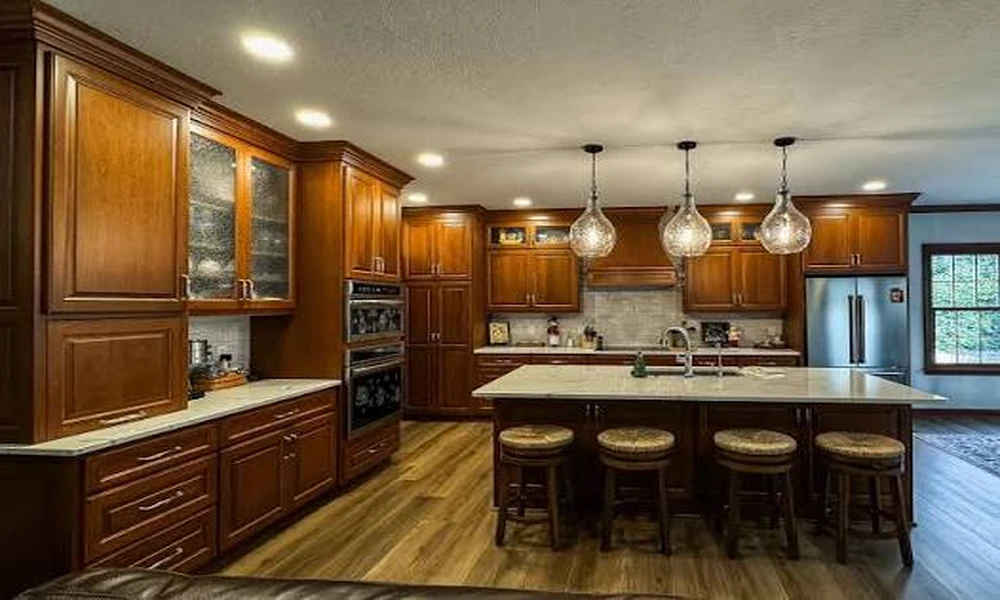
Most people decide to redo their kitchen in spring. The days get longer, open houses start showing up in the neighborhood, and the cabinets that seemed fine all winter suddenly look tired. By the time those homeowners call a contractor, though, they’re competing with everyone else who had the same idea in the same month.
Timing affects a kitchen project more than most people expect. It decides how quickly a crew can start, whether the cabinets arrive before demolition or weeks after it, and how many family dinners end up being takeout eaten in the living room.
Homeowners who start looking into kitchen remodeling in Akron quickly see the value of a team that handles plumbing, electrical, carpentry and tile under one plan, as adoniskitchenbath.com does. That way the calendar is built around a single schedule instead of four separate subcontractors. The bigger question is still when to start the clock, and the answer has more to do with what happens months before anyone picks up a pry bar.
The Months Nobody Sees
A remodel starts at the drawing table, not with demolition. Measurements, layout options, appliance choices, cabinet door styles, countertop slabs, sink and faucet pairings, lighting plans and hardware samples all have to be settled before anything gets ordered. For most households this design stretch takes somewhere between a few weeks and a couple of months, depending on how quickly decisions get made and how many times the island gets redrawn.
This is where winter shines. Cold, dark evenings are a good time to sit at the table with samples and floor plans. Homeowners who use those months for design can have everything ordered by early spring, while their neighbors are just making their first calls.
Cabinet Lead Times Run the Calendar
Cabinetry decides the schedule more than any other single item. Stock cabinets may be available in days, but most mid to high-end kitchens use semi-custom or custom lines, and those are built after the order is placed. Lead times of several weeks to a few months are common, and they tend to get longer when spring demand peaks.
An experienced remodeler won’t tear out a working kitchen until the cabinets are confirmed, or ideally sitting in a warehouse. A demolished kitchen waiting six weeks for boxes to arrive is the most frustrating part of a badly sequenced remodel. Appliances deserve the same caution. Ranges and built-in refrigerators can sit on backorder, and cabinet openings are often sized to the exact model, so swapping a unit at the last minute can mean recutting cabinetry.
The Case for Cold Weather Work
A kitchen is an interior project, so snow on the ground barely affects the work itself. Several things make the colder months appealing.
Contractor availability opens up. Many remodelers see their schedules loosen after the holidays, which can mean a quicker start, more attention from the project lead, and more flexibility when you need to make a decision.
Finishing before summer becomes realistic. A project that starts in late January or February is often done by spring, leaving the warm months for the deck, the garden and cookouts.
Supplier backlogs are shorter. Orders placed in the slower months often move through fabrication faster than ones placed in April.
Winter does have trade-offs. Doors open for deliveries let heat out, so a good crew will seal off the work area and keep it tight. Paint, adhesives, grout and some finishes need steady indoor temperatures to cure properly, so the furnace has to keep running even if part of the house is closed off. Icy driveways also complicate dumpster placement and countertop delivery, which is worth discussing before the first truck shows up.
Permits Keep Their Own Schedule
Any kitchen remodel that moves plumbing, adds circuits or takes out a wall will need permits, and review and inspection add their own time to the schedule. Projects inside Akron are reviewed by the city and also submitted to the Summit County Division of Building Standards, whose inspectors handle the electrical, plumbing, HVAC and structural checks. That matters on a project where drywall can’t go up until the rough-in inspections pass.
Build in time for plan review if you’re making structural changes, and expect at least two inspection stops before the walls are closed. The firms that handle this smoothly are usually the ones that have done it many times in the same jurisdiction.
Living Through the Weeks Without a Kitchen
Once demolition starts, the order of work stays fairly consistent, though the time each phase takes varies. Most full kitchen remodels move through these steps:
- Protection of floors and doorways, then removal of old cabinets, counters and flooring
- Framing changes along with rough plumbing, electrical and ductwork
- Rough-in inspections before anything is covered
- Insulation where needed, drywall, taping and primer
- Flooring and cabinet installation
- Countertop templating, which can only happen after the cabinets are set
- Countertop fabrication and installation, often taking a week or more
- Backsplash tile, fixtures, appliances, trim and final paint
- Final inspections and a punch list walkthrough
Step six catches people off guard. Stone counters are measured off the installed cabinets, not off the drawings, so there’s always a gap between cabinets going in and the sink being usable. Setting up a temporary kitchen with a microwave, a coffee maker, a small fridge and a utility sink in the basement or laundry room makes that stretch far easier to live with.
How Other Seasons Compare
Spring brings the most competition for crews and the most delivery backlogs. Summer brings heat, kids home from school and vacation plans that interrupt decisions. Still, many families find a kitchen-free summer easier because the grill can do a lot of the cooking.
Fall comes with a deadline problem. Homeowners often start in September hoping to host Thanksgiving in a new kitchen, and any delay in cabinets or countertops pushes the finish right into the holidays. A project that needs to be done by late November should really have started months earlier.
Choosing Your Own Starting Point
The best season is the one that fits your household. A family that travels in July might want the crew working while they’re away. A couple who entertains every December should finish well before the holidays. A household with just one bathroom and a busy schedule might want the quietest stretch of the year available.
Still, the pattern holds for most homes in Northeast Ohio. Plan in winter, order before spring demand peaks, and start the work once materials are confirmed. If you set the calendar up that way, you’ll spend far less time living around an unfinished kitchen.